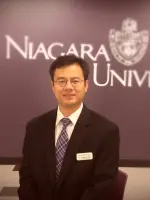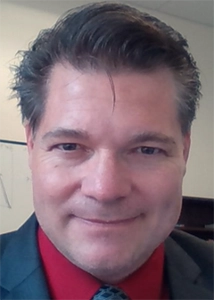
Check out Dr. Yonghong Tong and Dr. Taylan “Ty” Sen, both are Professors at Niagara University in Cybersecurity. They will be teaching Computational Analysis, AI, Data Science, and Forensic Investigation.
Computational analysis:
This is a 2-day session (2 three-hour sessions), we will provide students an opportunity to explore an interdisciplinary STEP project of AI, data science, and forensic investigation. Multiple interactive sessions will provide students both conceptual and practical learning experiences.
Day 2: Real-world hands-on mini investigation project. This will be a team project, each team can have 2-3 members. They will analyze a simulated case involving image, audio, and text evidence. They will conduct analysis with both AI tools and their own Python-based code. Each team will compare the results. Finally student teams will present their “Forensic Investigation
Report”. We would like to see all the teams have the same forensic evidence. Groups (3 teams at a time) will take turns going through an Escape Room Challenge which will require their newly acquired computer forensic skills to solve challenges.
List of Specific Lessons & Activities Currently Available
- PROGRAMMING BASICS
- Python Basics
- Markdown Basics
- Colab Notebooks
- Activity: Hello World with image and conditional response.
- IMAGE FORENSICS INTRO
- Extracting Metadata from Images with ExifTool
- Activity: extract GPS coordinates from evidence image
- Detecting/Highlighting Image Changes with OpenCV
- Activity: use tools to highlight changes in evidence image and original
image
- Activity: use tools to highlight changes in evidence image and original
- Face Detection in Images/Video with OpenCV
- Activity: take your own picture and test face detection confidence (with
funny faces/obstructions)
- Activity: take your own picture and test face detection confidence (with
- DeepFake Image Creation with Dali
- Activity: Use OpenAI Dali tool to generate fake images.
- DeepFake Image Creation with Selfie Segmentation
- Activity: Use student’s own photos to modify their background location.
- **DeepFake detection using SigLIP model
- Activity: Compare fake prediction using AI model with student and
evidence images.
- Activity: Compare fake prediction using AI model with student and
- Extracting Metadata from Images with ExifTool
- NETWORK FORENSICS
- Getting Network Info with ipconfig/IP
- Activity: Use tool to find out the Wi-Fi network name
- Getting Network Info with ping
- Activity: Estimate how far away a network is via lag time.
- Tracking Down a Wi-Fi Network Location with WIGLE
- Activity: See how global wifi map information is stored/retrieved to find the
physical location of a network.
- Activity: See how global wifi map information is stored/retrieved to find the
- Getting Domain Info with whois
- Activity: Find out who registered a domain name and when.
- Wayback Machine
- Activity: Find evidence of a website’s old configuration
- Getting Network Info with ipconfig/IP