
Empowering Discovery, Delivering Hope
Our Mission
At the Niagara University BioMedical Research Institute, our mission is clear: to drive advancements in basic and clinical research, with a focus on discovering and applying a groundbreaking general anti-viral therapeutic. We achieve this through the development of an innovative drug delivery system called Cholestosome, aimed at enhancing health and wellness.
In pursuit of our mission, we provide invaluable opportunities for undergraduate students to engage in high-level research and collaborate with esteemed healthcare professionals. By doing so, we not only contribute to the field of biomedical research but also align with Niagara University’s commitment to education and training. Our ultimate goal is to nurture and train the next generation of scientists, empowering them to make significant contributions to the scientific community and beyond. Together, we are shaping a brighter future for healthcare and scientific discovery.
Confidence. Clarity. Purpose.
At Niagara University, we foster a spirit of inquiry and problem-solving. Our dedicated faculty provides strong guidance and mentorship to students, instilling them with confidence and empowering them to tackle complex challenges.
At the core of our mission is the transmission of knowledge which comes to life through the meaningful interactions between faculty and students. These transformative relationships cultivate individuals who possess confidence, a clear sense of direction, and a deep sense of purpose.
Through our commitment to teaching, scholarship, and service, Niagara University prepares students for impactful roles in their chosen professions and society as a whole. Programs, such as the ones offered through the BioMedical Research Institute, aim to ignite a passion for learning within our students, equipping them with the skills and knowledge needed to make a difference.

Niagara University
BioMedical Research Institute
An extension of the B. Thomas Gallisano Center for Integrated Sciences at Niagara University, the BioMedical Research Institute is a leading hub for biomedical research, offering undergraduate students unparalleled opportunities to contribute to the field of healthcare. Led by Dr. Mary McCourt, our lab is located on the esteemed Buffalo Niagara Medical Campus, providing students with a cutting-edge facility for hands-on research and collaboration. Supported by a $750,000 federal grant secured by Congressman Brian Higgins, as well as funding from NYS ESD and the Dr. Lawrence Jacobs Foundation, our state-of-the-art lab is equipped with advanced instrumentation and specialized spaces.
Dr. Mary P. McCourt
Michael J., ’60 and Aimee Rusinko Kakos Endowed Chair of Chemistry
Dr. Mary P. McCourt’s journey in science is deeply personal. Many years ago, the loss of a brother to a brain tumor ignited a fire within her. Vowing to help others battling similar challenges, Dr. McCourt embarked on a path of scientific discovery, earning her Ph.D. in Chemistry and becoming a respected senior scientist.
Throughout her career, Dr. McCourt’s research has been driven by a singular goal: finding ways to deliver drugs more effectively, particularly to the brain. This enduring pursuit has led her to explore cutting-edge advancements, including the development of Cholestosome technology. This innovative approach holds immense promise for targeted drug delivery, potentially revolutionizing treatment for a wide range of diseases, including brain tumors.
Dr. McCourt’s expertise extends beyond the research lab. She played a pivotal role in designing and implementing the university’s state-of-the-art computational drug design laboratory and analytical instrumentation facilities. This hands-on experience allows her to create a dynamic learning environment where students can engage with the very tools and technologies shaping the future of medicine.
Whether teaching physical and computational chemistry, chemistry for nurses, or general chemistry labs, Dr. McCourt fosters a love of science in her students. Her diverse background in history allows her to weave the historical context of scientific discoveries into her teaching, making the subject even more engaging.


Buffalo native Rob Tober, administrative liaison for Niagara University’s Biomedical Research Institute, is your bridge to groundbreaking science and research opportunities. A Niagara University alumnus (B.A. in History/Political Science), Rob’s path to the institute wasn’t linear. After dedicating nine years to the Erie County Board of Elections, his interest in global affairs led him to Norwich University to pursue an M.A. in International Relations with a concentration in International Security. While enrolled in a Ph.D. program in History, the opportunity to work at the institute ignited a new flame. Now, Rob is responsible for connecting high school and undergraduate students with the exciting world of biomedical research. Whether you’re a teacher seeking to participate in the NUSTEP program, a student interested in a lab visit, or someone curious about research collaborations, Rob is here to help. He manages the institute’s website, coordinates student visits, and facilitates meetings with scientists and industry partners. Rob’s diverse background and dedication ensure the smooth operation of the lab and empower the next generation of scientific minds.
In his current role, Brandon is responsible for developing formulation protocols for the innovative cholestosome Zinc technology, ensuring the efficacy and safety of the formulations. Additionally, he oversees the maintenance of all analytical instrumentation, playing a crucial role in supporting the laboratory’s research initiatives and ensuring the highest standards of scientific integrity.

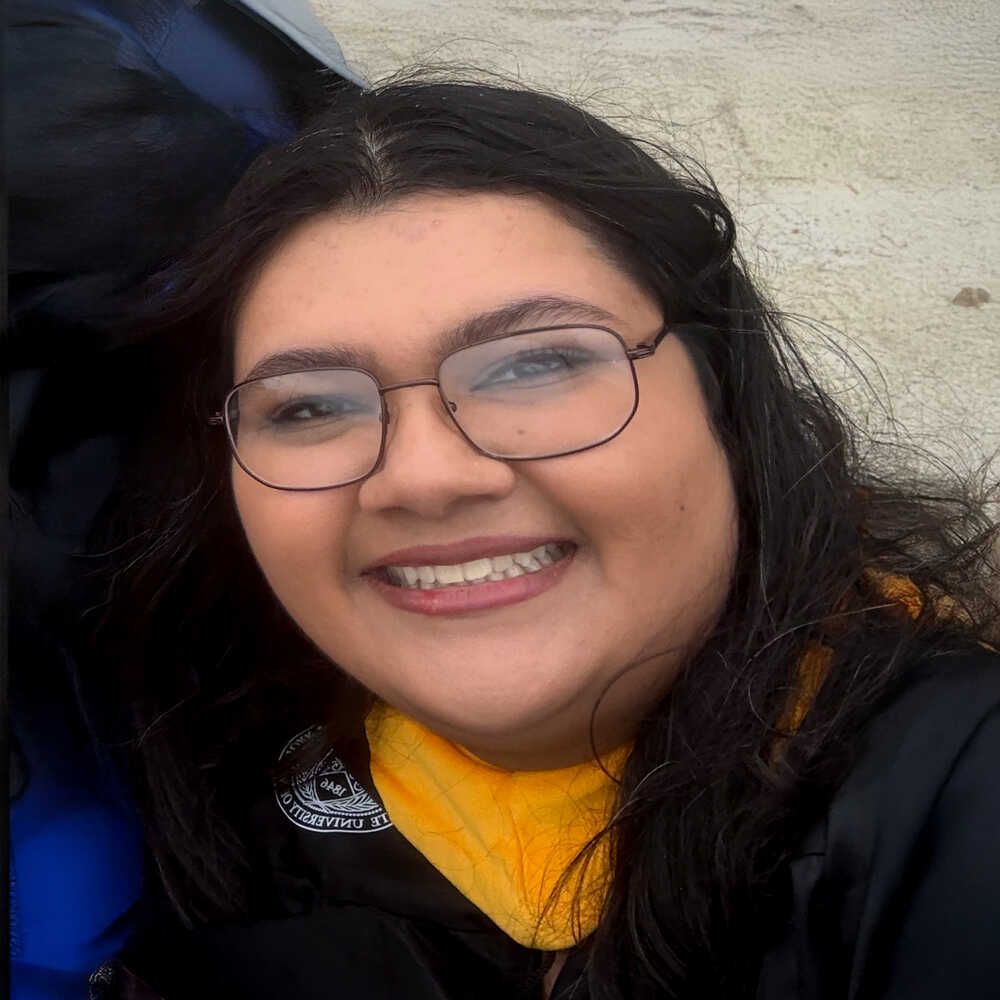
Aditi Chitnis
Cell Technologist
Aditi Chitnis is an applied biosciences researcher with a strong cross-disciplinary background spanning microbiology and molecular biology. She holds a master’s degree in biotechnology from the University at Buffalo, where her research focused on isolating bacteriophages from environmental samples and conducting genomic sequencing using Oxford Nanopore technology. As part of a broader STEM outreach initiative, she optimized phage extraction protocols for high school classrooms, helping to make hands-on microbiology more accessible to younger students.
With a deep interest in cellular signaling, Aditi is especially drawn to understanding how treatments interact with biological systems. During her time as an undergraduate student at Canisius University, she explored the epithelial-mesenchymal transition (EMT) pathway in prostate cancer cells. She specifically examined the effects of endocrine disrupting chemicals such as estradiol and BPA on gene expression and cell behaviors.
As the Institute’s research cell technologist, Aditi is responsible for all experiments involving cell culture and viral growth work.
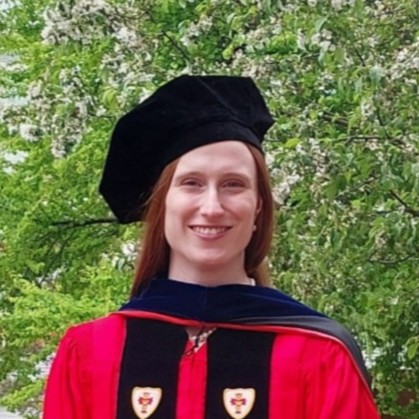
Dr. Alison Lanzi is a capable scientist who recently completed her Ph.D. in biomedical engineering at Boston University. Inspired by the evolution of proteins from a limited set of domains, she sought to fabricate novel materials with emergent properties by shuffling and combination of existing biomaterials. She applied bioorthogonal chemistry to synthesize new block copolymers, then used them to formulate nanoparticles and degradable hydrogels for drug and cell delivery systems with applications in cancer, diabetes, and liver disease.
Alison earned her bachelor’s degree in biomedical engineering from Rensselaer Polytechnic Institute, where she learned to apply engineering principles to medical problems. During this time, she helped to create an in vitro vascular tissue network using 3D hydrogel printing.
In between her bachelor’s and Ph.D. studies, Alison developed scientific instruments in the laboratory equipment and agricultural analysis sectors. This included a western blot processor, a grain composition analyzer, and a cow mastitis detector.
In her current role, Alison provides guidance on the formulation of drug delivery systems and their applications in various disease states. She also offers academic writing support as well as strategic advise on funding opportunities.
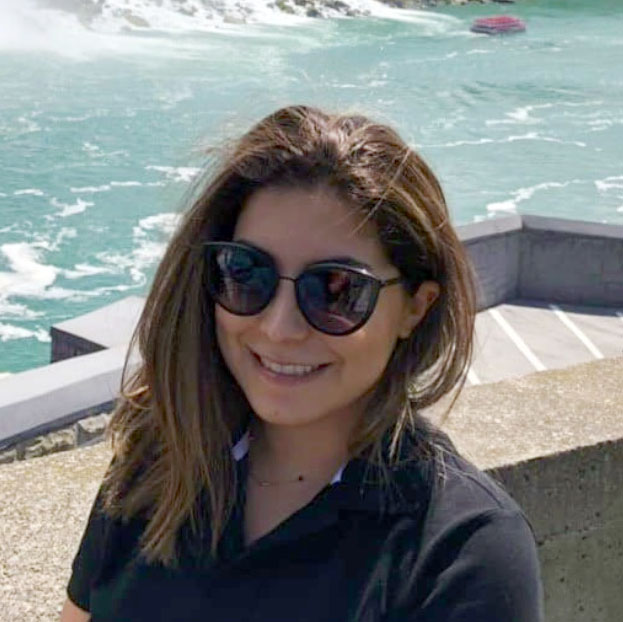
Yasaman Mohammadi, PharmD, MBA
Strategic Healthcare & Business Consultant | Scientific Advisor
Yasaman Mohammadi is a strategic healthcare and life sciences consultant whose work centers on advancing scientific innovation through structured business strategy and commercialization planning. With a multidisciplinary background spanning pharmacy, pharmaceutical management, and global business leadership, she brings a systems-level perspective to research translation and healthcare innovation.
She holds a Doctor of Pharmacy (PharmD), an MBA in Healthcare Management and Global Business & Supply Chain Management from Niagara University, and an MBA in Pharmaceutical Management. Her combined clinical and business training enables her to evaluate biomedical discoveries not only from a scientific standpoint, but also through regulatory, operational, and market-access lenses.
Yasaman’s professional focus lies in bridging laboratory research with scalable, real-world application. She advises research-driven and early-stage healthcare initiatives on product development strategy, regulatory pathway alignment, commercialization roadmaps, lifecycle planning, and sustainable growth frameworks. Her work emphasizes aligning scientific rigor with viable business models to ensure long-term impact and accessibility.
Her interests include therapeutic product strategy, health systems optimization, evidence-based wellness innovation, and advancing translational research initiatives that improve healthcare delivery and patient outcomes.
At NUBRI, Yasaman contributes strategic insight to research commercialization efforts, interdisciplinary collaboration, and innovation planning. She supports initiatives aimed at strengthening the pathway from academic discovery to industry integration, helping position biomedical research for measurable, sustainable impact within the broader healthcare ecosystem.