Niagara University Biomedical Research Institute and Facultad de Farmacia, Universidad CEU San Pablo join in a collaborative fight against cancer.
A recent publication from the Proligar Research Group in Universidad CEU San Pablo, Spain: “Targeting Protein Kinase 2 and Histone Deacetylase with a Dual Inhibitor Effectively Reduces Tumor Growth in a Triple-Negative Breast Cancer Xenograft Model”, was published in ACS Pharmacology & Translational Science.
The study reports IOR-160, a novel small molecule acting as a dual inhibitor of CK2 and HDAC, two enzymes that play key roles in cancer progression. Their preclinical work shows promising antitumor activity in triple-negative breast cancer, one of the most aggressive and therapeutically challenging forms of the disease.
Motivated by these findings, Dr Mary McCourt research group (Niagara University Biomedical Research Institute) contacted Prof Beatriz de Pascual-Teresa and Dr Irene Ortín Remón Research group, Facultad de Farmacia, Universidad CEU San Pablo to explore opportunities for collaboration.
Together, we have now established a joint project to investigate cholestosome-based drug delivery strategies for IOR-160.
In this multidisciplinary effort, the Proligar Group contributes expertise in compounds synthesis and antitumor activity and the McCourt group provides advanced drug delivery expertise, specialised equipment, and methodologies for cholestosome encapsulation. Together the groups will evaluate encapsulation of IOR-160 in cholestosomes and assess its biological activity in glioblastoma cells, with the potential to advance to in vivo studies.
By bringing together expertise in medicinal chemistry, cancer biology and drug delivery, we aim to promote the development of new therapeutic strategies against glioblastoma cancer, contributing to one of the most pressing public health challenges worldwide.
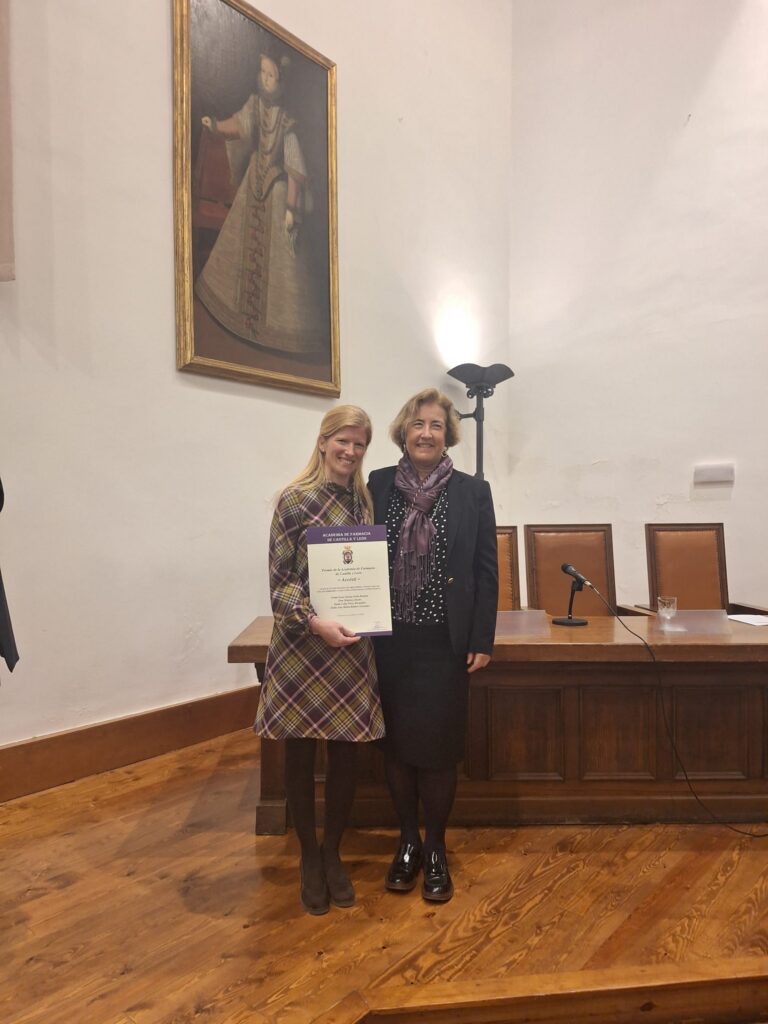
Pictured below, Dr Irene Ortín Remón(left) Dr Beatriz de Pascual-Teresa(right).